
Import Groups into a Group Class
In addition to manually assigning Groups to a Group Class, the Loyalty platform allows you to import a file of new Groups, and assign them to the selected Group Class. This import method allows you to import only new Groups. The platform will create the new Groups within the platform, and assign them to the currently selected Group Class. You can't use the import method to assign existing Groups to a Group Class.
Note: The platform supports the import of Groups into a Group Class only via the Standard Import feature; the platform does not support importing Groups into a Group Class via the Advanced Import feature. For more information on these import features, see Importing Data into Loyalty.
When using the Standard Import feature to import Groups into a Group Class, the import file must be located on your local PC, it must be either comma-delimited or semicolon-delimited, and it can include the following columns:
-
last_name (required): The name of the Group.
To import a file of Groups and assign them to a Group Class:
-
Select Members from the top navigation bar, then select Groups > Group Classes from the side navigation menu. The Group Classes screen is displayed.
-
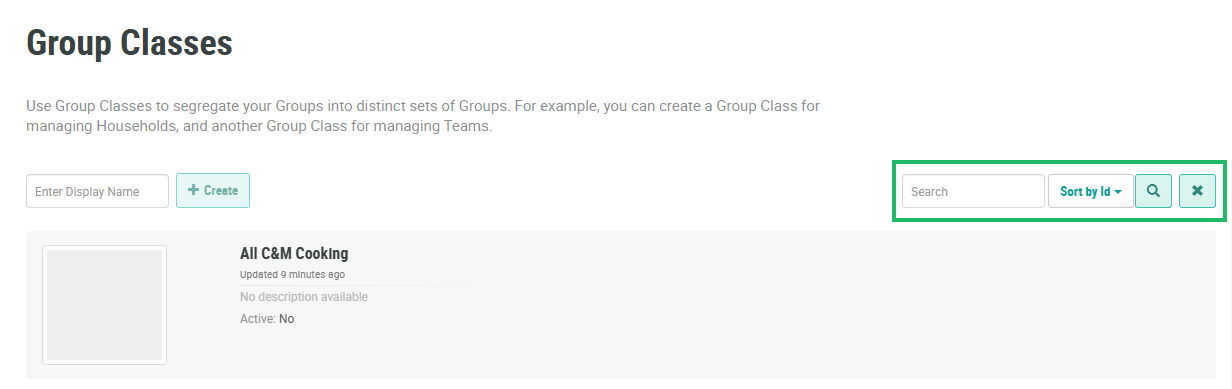
The search feature on the Group Classes screen allows you to search for a specified text string anywhere within the Display Name and Internal Name. Optionally, in the Search field, enter the desired text string. Click the Search icon. The screen is refreshed to show only the Group Classes that meet your search criteria.
-
To sort the search results, select the desired sort order from the Sort By drop-down menu. The default sort order is by: Group Class ID.
-
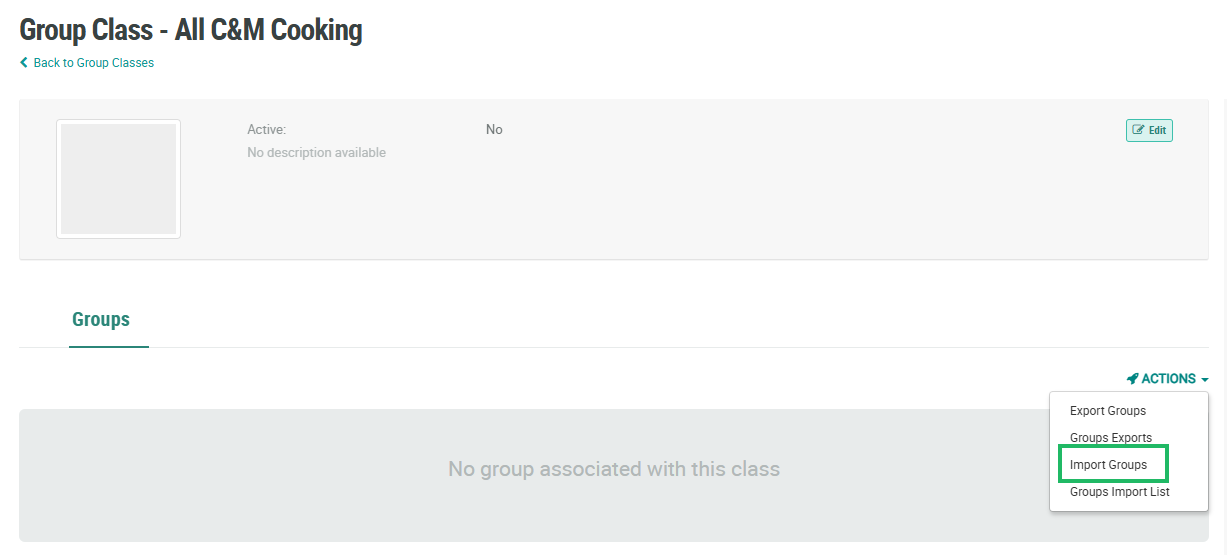
Select the desired Group Class. The Group Class Details screen is displayed with the Groups tab selected.
-
From the Actions drop-down menu, select Import Groups. The Create New Import pop-up window is displayed.
-
Enter or select the desired configuration options. The different sections available within this window are described below in detail.
-
When finished, click Submit to execute the import process.
File Options
This section defines the basic properties of the import file.
-
From the Import Method drop-down menu, define how you want the platform to handle the import records:
-
Insert Data or Update if Duplicate: The platform will create new records and update existing records.
-
Insert Data or Skip if Duplicate: The platform will create new records only; updates to existing records are ignored.
-
Update Data or Skip Insert: The platform will update existing records only; new records are ignored.
-
-
The Find Options field is automatically populated with the required columns for this import type. Optionally, depending on the type of object being imported, you may be able to select additional columns on your import file. Add these additional columns in the order in which they appear in your file.
-
Optionally, to import blank values, select Yes next to Include Include Blank Values.
-
The platform supports email and phone number syntax validation on the appropriate import fields. Optionally, to run this validation, select Yes next to Validate Records.
-
If you have Business Units enabled in your account, select a Business Unit from the Business Unit drop-down menu.
-
To send email notifications following a successful import process, enter one or more email addresses in the Success Import Email Recipients field.
-
To send email notifications following a failed import process, enter one or more email addresses in the Failed Import Email Recipients field.
-
To select the import file, click Choose File. Browse to and select the desired file, then click Open.
-
Select the column separator used in the import file: Comma or Semicolon.
Child Options
This section allows you to populate rows in "child" tables joined to the main object table into which you are importing data.
-
Click Add Child.
-
From the Resource drop-down menu, select the desired child table.
-
The Find Options drop-down menu is populated with all of the columns in the selected child table. From this menu, add the columns you intend to import. Add these columns in the order in which they appear in your import file.
-
If you want to skip the child record when the parent record is skipped, check Skip with Parent.
-
Repeat the above steps as needed to define additional child tables. Optionally, to delete a child table, click Delete.
Import Options
This section provides additional options regarding the use of Lookup tables in the import process:
-
Click Add Options.
-
To use a Lookup table, select the desired table from the Lookup Table drop-down menu.
-
From the Lookup Column drop-down menu, select the desired column on the Lookup table.
-
Enter a value in the Rename as field.
-
In the Find by Columns field, select one or more columns used to identify existing records in the database.
-
If the Lookup table is required, select Yes next to Required.
-
If you want to stop the import process if a duplicate record is found, select Yes next to Abort on Duplicate Record.
-
Optionally enter any additional conditions as Groovy expressions in the Condition field.
-
Optionally, click Delete to remove the additional import options.
